Showing posts with label Ovid. Show all posts

7.11.2013

You're one of those guys who can make a party just by leaving it.

From Wodehouse's The Girl in Blue(p.35):
'...How well do you know your Chaucer?'
'My what?'
'The father of English poetry.'
'Oh, that Chaucer?'
Later (p.55) a neat summary from mother to child on how to catch a man:
a man who writes little poems can't have any sales resistance.
The little dialogue from which this is snatched is interesting as a sort of female-version of the ars amatoria.

Later (p.70) a reference to Roman eating habits:

Jerry had abandoned his original idea of making the sort of lunch that would have appealed to the Roman emperor Vitellius,...
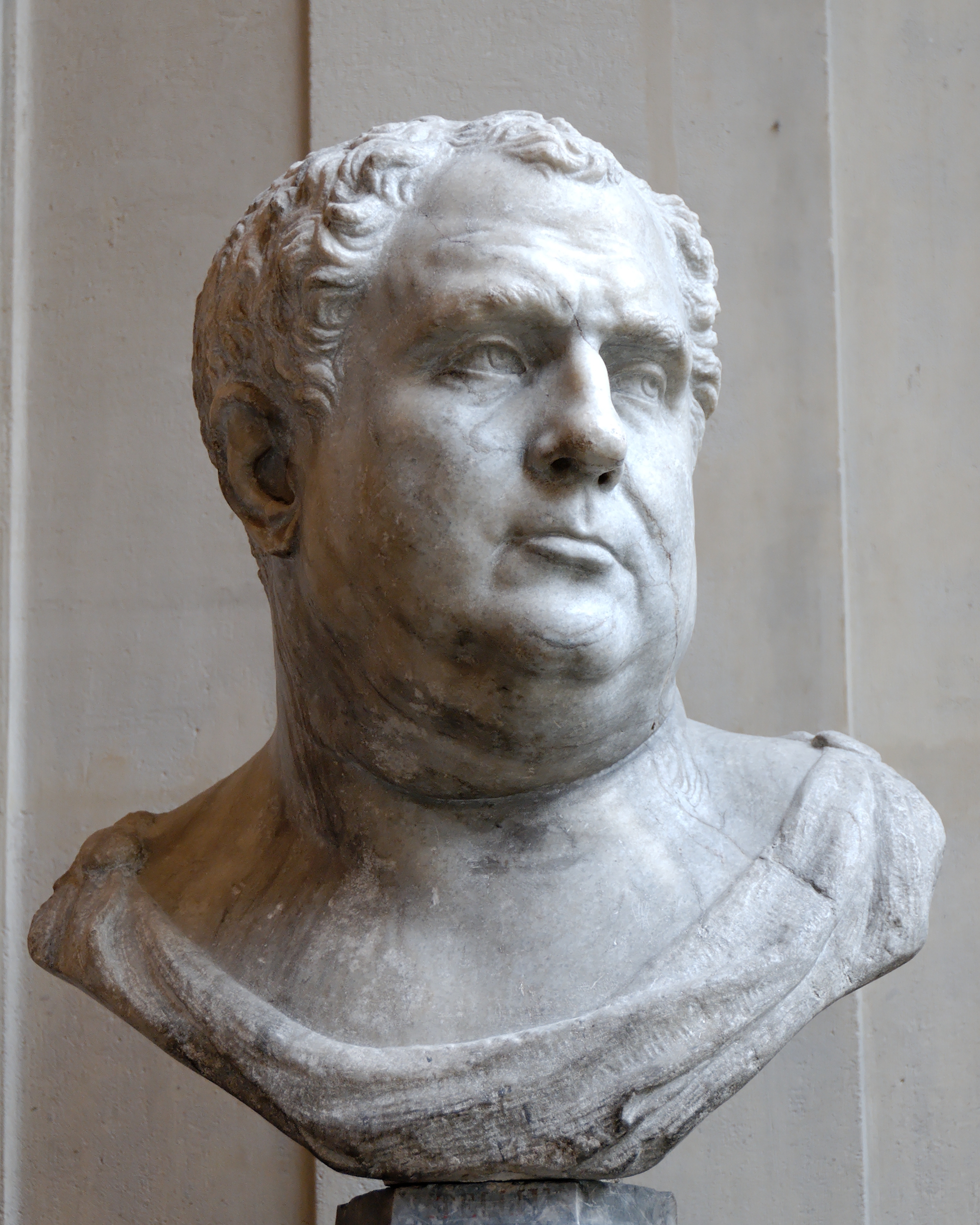
[Above: The rather heavy 8th emperor of Rome in question]

Later still (p.90) we find Vitellius' contemporary Pliny the Elder:
 How true is the old saying, attributed to Pliny the Elder, that a man who lets himself get above himself is simply asking for it, for it is just when things seem to be running as smooth as treacle out of a jug that he finds Fate waiting fr him round the corner with the stuffed eelskin. 

12.19.2011

Truth and the Critical Spirit

From Etienne Gilson's Héloïse and Abélard:
We have seen the birth of the "Critical Spirit" and all the pedantic fiction with which it encumbers history, fiction which at its best is not even entertaining. For it is characteristic of the "Critical Spirit" to be itself the measure of historical reality. When an event surprises it, the event loses its right to have taken place. When a sentiment goes beyond its grasp, he who expresses that sentiment loses the right to have experienced it. It is to be feared that this story of great souls, reduced to the stature of the scholars who write about it, is sometimes wanting in graphic beauty, but it will inevitably be wanting in truth when that truth consists in personal greatness.
There is nothing quite comparable to the passion of the historians of the Renaissance for its individualism, its independence of mind, its rebellion against the principle of authority, unless perchance it is the docility with which those same historians copy one another in dogmatizing about the Middle Ages of which they know so little.
The best example we can find of historical cliché is the concept of an anti-Christian Renaissance which historians of literature pass on from one to the other as though Lefèvre d'Etaples, Budé, Erasmus, ever pretended to be escaping from any dogma, or as if their adherence to dogmas ever prevented St. Bernard from being eloquent, Dante and Petrarch from writing well, or St. Bonaventure and St. Thomas from thinking.
In conclusion:

What, then, do the facts teach? That Abélard was the first of the moderns? This would be to substitute one piece of foolishness for another. That Héloïse was the first modern woman? On the contrary, as Jean de Meung would say, the world has never since seen her like: Mais je ne crei mie, par m'ame, / Qu'onques puis fust nul tel fame. (By my soul, I do not believe / That another like her ever lived)

I also found this fact interesting:
Either the abbess [i.e. Héloïse] has a good memory, which is most likely, or there was a copy of [Ovid's] The Art of Loving at the Paraclete.


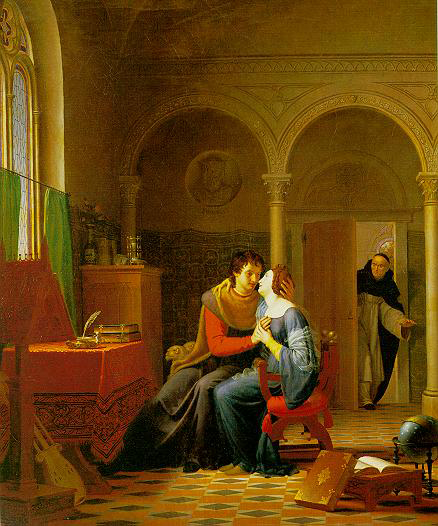
Abaelard and Heloise surprised by Master Fulbert
Jean Vignaud, 1819