Showing posts with label Sir J.G. Frazer. Show all posts

6.19.2012

Ouch...

I came across this rather cavalier reference to Sir James George Frazer in Cathy Gere's Knossos and the Prophets of Modernism:
Archaeoogists, anthropologists, and armchair compilers of catalogs of religion like The Golden Bough...(p.10)
Just to be clear whom the reference intended:
James Frazer, the greatest of all armchair anthropologists (p.123)
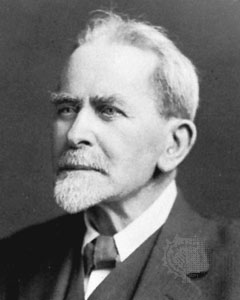

But besides the passing swipe at  literary giants (who often can use the cutting-down-to-size), the book was rather good as seen in this bit from the conclusion:
In other ways, too, the human sciences have returned to late nineteenth-century form. In the last couple of decades the assumption that human history should be understood as little more than an extension of natural history has come roaring back. Retrospective prophecy has once again entered a grandiloquent phase, opening up great swathes of the human condition to the narratives of historical reconstruction. "Evolutionary pressures on our hunter-gatherer ancestors" provides the explanatory framework for all aspects of our putatively natural selves. The double helix of DNA is celebrated as a bioarchaeological record of each individual organism's evolution. The search is on for reductive neurological explanations for our complex social behaviors. It seems that the sciences from which Nietzsche derived his dark philosophy have returned with all the force of the long repressed. (pp.232-3)

11.09.2011

Pausanias and Athens

Only the Athenians met all their obligations. They stood against the Persians, twice against the Macedonians, and against the Gauls, and, he says, they were also the leaders in the last three crises–which is correct for the battles against Philip and Antipater (I.25.3), but not for the repulsion of the Gauls. The Athenians did fight against them, and they fought bravely, but the Aetolians were the leaders. Nevertheless, as Pausanias sees it, the Athenians were the only Greeks who never failed Greece. (Christian Habicht Pausanias' Gude to Ancient Greece, p.108)

p.s. An interesting quote from the correspondence between Frazer and Housman can be found in an Appendix on the scholarly reception of Pausanias:

"He [Wilamowitz] has always seemed to me a sophist with an infallible instinct for getting hold of a stick by the wrong end. I do not forget how, with the stick (wrong end up, as usual), he belaboured my poor old friend Pausanias and no doubt many a better man." (letter from Sir J.G. Frazer to A.E. Housman, October 1927, quoted in Christian Habicht Pausanias' Gude to Ancient Greece, p.174)