6.30.2012

The Founders' Books

When I ordered Books and the Founding Fathers, I was hoping for a far more comprehensive tome on the books and the Founding Fathers. Still, it proved a good little essay that I would many would read about the importance of literacy on the Founders. There are multiple appendices with useful recommendations for future reading and fragments of the Founders on books.

The following is from the introduction:
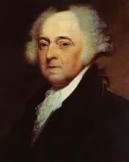
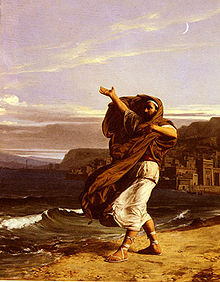
Would John Adams have been who he was and done all that he did during our revolution if he had not paced the floors of his room at night declaiming Cicero? Would Thomas Jefferson have been able to pen the soaring language of our Declaration of Independence had he not spent evenings alone with the plays of Shakespeare and the orations of Demosthenes? (p.6)
6.28.2012

Johnson's Humorists

I did not find Paul Johnson's Humorists nearly as good as his other biographical series (Intellectuals, Creators, Heroes). Again, a book passes without a quote. I think I shall read some Wodehouse...

6.22.2012

Sub 4:00

A quick note to say I finished Sub 4:00: Alan Webb and the Quest for the Fastest Mile. Nothing worth quoting.

6.19.2012

A Call to Arms

From Letters from Lake Como (Explorations in Technology and the Human Race):
The new events deprive the people of the older culture of any possibility of being. (p.79)
...we must transform what is coming to be. But we can do this only if we honestly say yes to it and yet with incorruptible hearts remain aware of all that is destructive and nonhuman in it. (pp.80-1)
The fact that the machine brings a measure of freedom hitherto unknown is in the first instance a gain. The value of freedom, however, is not fixed solely by the question "Freedom from what?" but decisively by the further question "Freedom for what?" Every social pedagogue knows what problems arise regarding use of the time that is made free by machines. If we do not succeed in making meaningful use of the free days then the result of such "freedom" is negative. (p.110) 

Ouch...

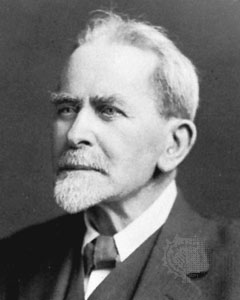
I came across this rather cavalier reference to Sir James George Frazer in Cathy Gere's Knossos and the Prophets of Modernism:
Archaeoogists, anthropologists, and armchair compilers of catalogs of religion like The Golden Bough...(p.10)
Just to be clear whom the reference intended:
James Frazer, the greatest of all armchair anthropologists (p.123)


But besides the passing swipe at  literary giants (who often can use the cutting-down-to-size), the book was rather good as seen in this bit from the conclusion:
In other ways, too, the human sciences have returned to late nineteenth-century form. In the last couple of decades the assumption that human history should be understood as little more than an extension of natural history has come roaring back. Retrospective prophecy has once again entered a grandiloquent phase, opening up great swathes of the human condition to the narratives of historical reconstruction. "Evolutionary pressures on our hunter-gatherer ancestors" provides the explanatory framework for all aspects of our putatively natural selves. The double helix of DNA is celebrated as a bioarchaeological record of each individual organism's evolution. The search is on for reductive neurological explanations for our complex social behaviors. It seems that the sciences from which Nietzsche derived his dark philosophy have returned with all the force of the long repressed. (pp.232-3)

6.13.2012

Pompey in the Parlor

I was rather disappointed by John Masefield's The Tragedy of Pompey the Great. C.S. Lewis liked it (in 1922) and D.L. Page (in 1928) won the Gaisford Prize at Oxford for a translation of Act 2 Scene 1. It lacks a sense of grandeur and it is dated by its British chumminess in vocabulary (e.g. "Look. Man."). The first two acts read as though set in a sitting room with many pregnant pauses rather than words of merit.


6.08.2012

You Reap What You Sow (in Greek)


I reread in a scholion to Pythian Four a copy of a supposed oracle to Battus the First (a/k/a the Stammerer), the founder of Cyrene. I was rushed before and had not paused to note that it contained at its end an exhortation that gives the Greek equivalent of "you reap what you sow":

οἷά τἀνὴρ ἕρξει, τοῖον τέλος αὐτὸν ἱκάνει.


The slight irony in this is that the Greek colonists at Cyrene reaped what they did not sow, i.e. silphium (pictured on the coin above). They harvested the nature plant to extinction.