 . It was around and we had started watching the miniseries. Is it snobbery or diligence to read the books on which everything you watch is based?
7.22.2013

7.19.2013
Wodehouse and Classics, yet again
From Jeeves And The Tie That Binds :
:Precisely, sir. Carpe diem, the Roman poet Horace advised. The English poet Herrick expressed the same sentiment when he suggested that we should gather rosebuds while we may. Your elbow is in the butter, sir. (p.8)
"Know him?" I said. "You bet I know him. We were like...Jeeves!" "Sir?" "Who were those two fellows?" "Sir?" "Greek, if I remember correctly. Always mentioned when the subject of bosom pals comes up." "Would you be referring to Damon and Pythias, sir?" (p.18)
Florence Craye...but while it lasted I felt like one of those Ethiopian slaves Cleopatra used to push around, and I chafed more than somewhat. (p.22)
"Apparently he failed to wow the customers at the Chamber of Commerce lunch, where she had been counting on him being a regular–who was the Greek chap?" "Bertie if I wasn't afraid of waking Runkle, I'd strike you with a blunt instrument, if I had a blunt instrument. What Greek chap?" "That what I'm asking you. He chewed pebbles." "Do you mean Demosthenes?" "You may be right. I'll take it up later with Jeeves." (p.134-135)
"...A pity that Bingley is flourishing like a green what-is-it, but one can't have everything." "No, sir. Medio de fonte leporum surgit amari aliquid in ipsis floribus angat." "I don't think I quite followed you there, Jeeves." "I was quoting from the Roman poet Lucretius, sir. A rough translation would be 'From the heart of this fountain of delights wells up some bitter taste to choke them even among the flowers.'" "Who did you say wrote that?" "Lucretius, sir, 99-55 B.C." "Gloomy sort of bird." "His outlook was perhaps somewhat somber, sir." (p.203-4)
7.18.2013
American Cicero
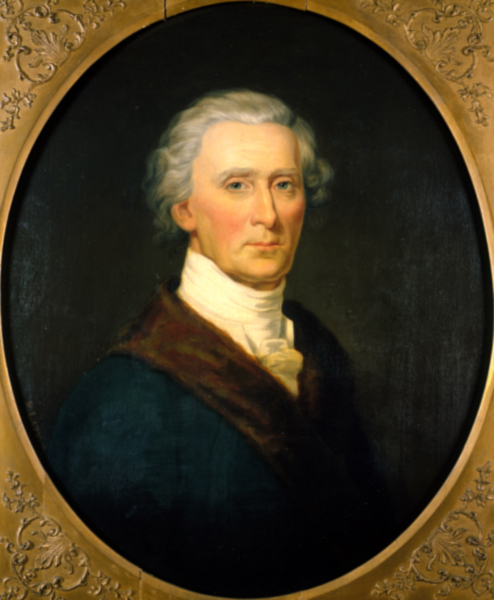
From American Cicero: The Life of Charles Carroll :

:Would it not be very odd for a man to know Greek and Latin and not be able to describe the Position of any Noted place or Kingdom, or to Add, Multiply, or Divide a Sum. - Charles Carroll of Annapolis, letter to Charles Carroll, Sept. 30, 1754
Religious persecution, I own, is bad, but civil persecution is still more irksome: the one is quite insupportable, the other is alleviated by superior motives which tho' they can not diminish the real evil, yet enable us to bear it with greater resignation. - Charles Carrol, letter to Charles Carroll of Annapolis, Feb. 30, 1760
I find no conversation more agreable than that of a Horace's a Virgil's a Racine's &c, their company is instructive and at the same time agreable. - Charles Carroll, letter to parents, June 14, 1758
Daniel Webster and the Invasion of Canada
From Daniel Webster on the Draft: Text of a Speech delivered in Congress, December 9, 1814:

You may sing to them the song of Canada conquests in all its variety, but they will not be charmed out of the remembrance of their substantial interests and true happiness.Having finally put aside Wallace's 400 page history of Canada, I decided to pick up a shorter read during lunch with this speech of Daniel Webster, little realizing how much it touched upon a major part in that history.

All government, like Gaul, is divided into three parts.
From A History of the Canadian People:

The Champlain astrolabe (pictured above) is now in the Canadian Museum of Civilization.
On Bishop Laval (p.79):
He [Champlain] set out up the Ottawa with two canoes. He took with him also his surveying instruments; and, in crossing one of the numerous portages on the Ottawa, he lost his astrolabe, the instrument which he used for determining longitude and latitude. It is interesting to know that over two hundred and fifty years later, in 1867, this astrolabe was turned up by a farmer who was ploughing some new land near the town of Renfrew...
The Champlain astrolabe (pictured above) is now in the Canadian Museum of Civilization.
On Bishop Laval (p.79):
He fought persistently against the sale of spirituous liquors to the Indians; and though he failed in this fight, since it was felt that to deny French brandy to the Indians was merely to drive them "to English rum and Prostestantism"...
7.11.2013
You're one of those guys who can make a party just by leaving it.
From Wodehouse's The Girl in Blue (p.35):
Later (p.70) a reference to Roman eating habits:

(p.35):
'...How well do you know your Chaucer?'Later (p.55) a neat summary from mother to child on how to catch a man:
'My what?'
'The father of English poetry.'
'Oh, that Chaucer?'
a man who writes little poems can't have any sales resistance.The little dialogue from which this is snatched is interesting as a sort of female-version of the ars amatoria.
Later (p.70) a reference to Roman eating habits:
Jerry had abandoned his original idea of making the sort of lunch that would have appealed to the Roman emperor Vitellius,...
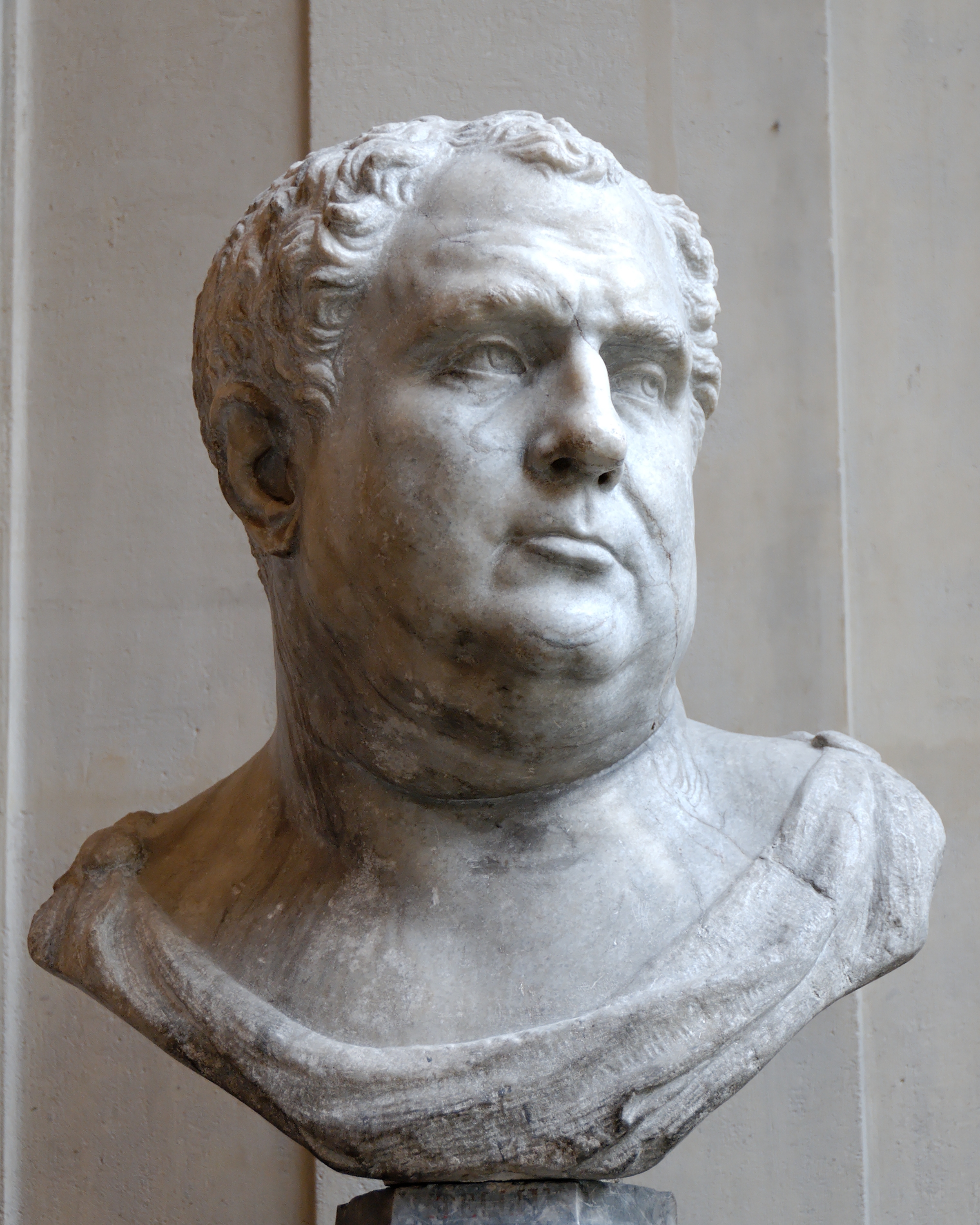
[Above: The rather heavy 8th emperor of Rome in question]
Later still (p.90) we find Vitellius' contemporary Pliny the Elder:
How true is the old saying, attributed to Pliny the Elder, that a man who lets himself get above himself is simply asking for it, for it is just when things seem to be running as smooth as treacle out of a jug that he finds Fate waiting fr him round the corner with the stuffed eelskin.
7.08.2013
I try, and too often fail, to work according to the Pomodoro technique. In the breaks between my work today I decided to have a crack at a book lying on a shelf as I entered the library: Roman Britain: A Very Short Introduction . I have a whole box of books on Roman Britain and read one or two many years ago, but I never have the time to invest in the others. I myself am as fascinated as the Victorians were with the ambiguous relationship between Britain and Rome. On the one hand, there is the claim to be the last of the Romans, true heirs of law, architecture, civilization, etc. manifest, for example, in their adoption of Constantine as a Romano-Brit (see Evelyn Waugh's Helena
 ); on the other hand, there is the pride in the unconquered Pict or Boudica (one thinks of Caesar, primeval forests, and chariots or Cymbeline). There are those attempts to resolve the paradoxical identity of the British in Sutcliff's The Eagle of the Ninth
 .
Alas, I must read things like this,
Apparently, the Romano-British also liked their share of black magic,

. I have a whole box of books on Roman Britain and read one or two many years ago, but I never have the time to invest in the others. I myself am as fascinated as the Victorians were with the ambiguous relationship between Britain and Rome. On the one hand, there is the claim to be the last of the Romans, true heirs of law, architecture, civilization, etc. manifest, for example, in their adoption of Constantine as a Romano-Brit (see Evelyn Waugh's Helena
); on the other hand, there is the pride in the unconquered Pict or Boudica (one thinks of Caesar, primeval forests, and chariots or Cymbeline). There are those attempts to resolve the paradoxical identity of the British in Sutcliff's The Eagle of the Ninth.Alas, I must read things like this,
The once-popular belief that Britain was largely covered with forest until cleared by the Anglo-Saxons is now discredited. By the Roman Conquest, although there was still a great deal of natural forest, the population had already grown to something of the order it reached under the Romans, two or three times greater than during the reign of William the Conqueror... (p.5)that bring all those feelings of guilt that I prefer in some way the sparsely inhabited and thick forests I imagined when first reading Caesar and Tacitus than scientific truth.
Apparently, the Romano-British also liked their share of black magic,
...excavation of a temple at Uley in Gloucestershire has approximately doubled the total of curse-bearing tablets known form the entire Roman world. (p.35)

Subscribe to:
Posts (Atom)